Matt Atkinson Art
Follow me on Facebook
  • Matt Atkinson
  • Artist Bio
  • Cowboy and Indian Art
  • Wildlife Art
  • Landscapes
  • Pencil Art
  • Blog: Beyond Paint and Canvas
  • Contact

Martin Grelle/Bruce Greene Painting Workshop

2/11/2013

7 Comments

 
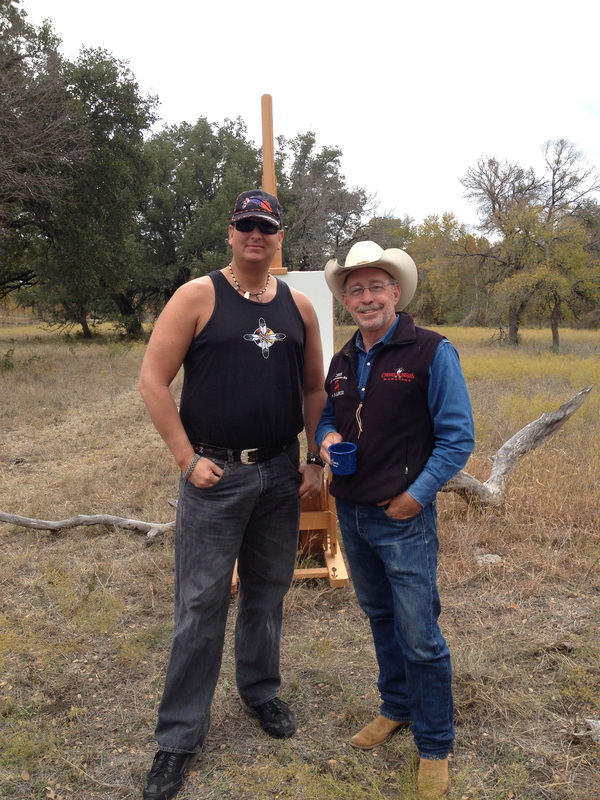
    I was fortunate enough to be able to spend a weekend under the instruction of two of the premier western artists in America today. Bruce Greene is an extraordinary painter and sculptor, and Martin Grelle is my "art hero", and has befriended and encouraged me as an artist.
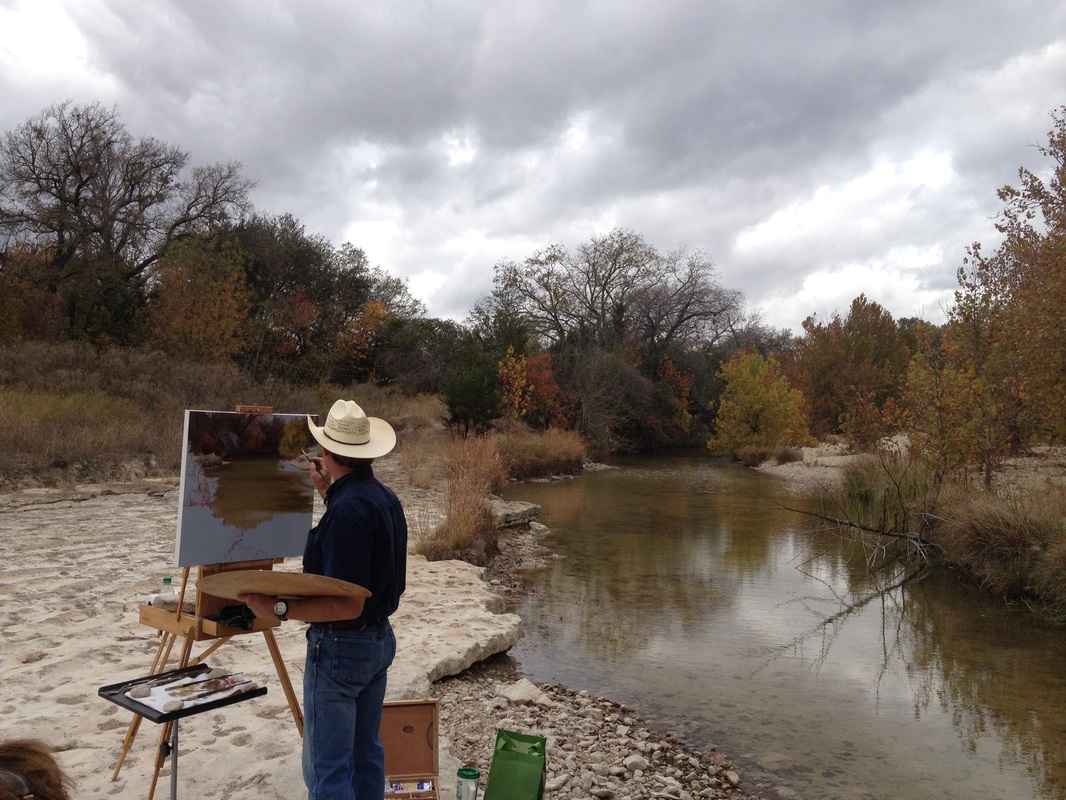
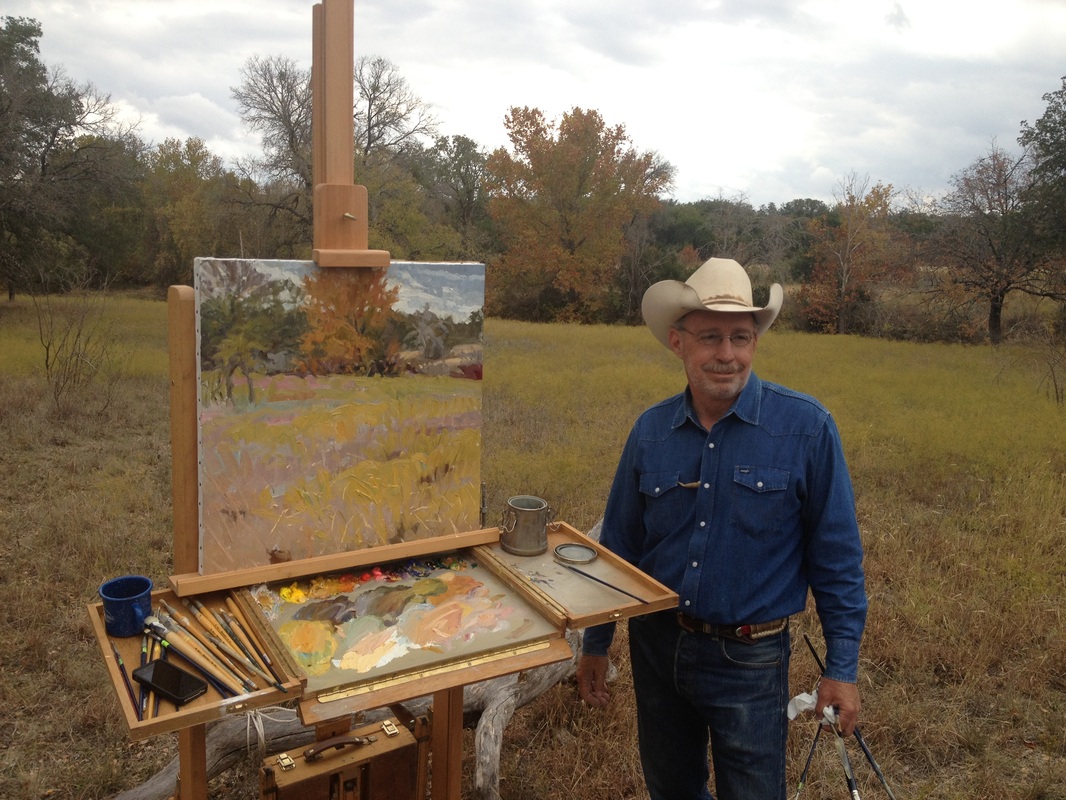
    On the first day, we all went to a creek bed at the back acres of a ranch for plein air oil painting. Martin demonstrated his methods first, and then offered assistance. And wouldn't you know it? I accomplished what may have been my worst painting ever, right in front of my role models. Ugh. But Martin and Bruce were encouraging and helpful.
    On the second day, they offered critique of student art. I had purposely brought two of my weaker paintings for their review because I didn't want to try to impress them, I wanted them to point out where my work wasn't successful. To develop skill as an artist requires a thick skin and a diminishing ego; I had to sit and take it while they demolished my work's errors. The most important things they taught me were about using value contrasts to create depth in landscapes, and to improve my depiction of horse anatomy.
    I brought one of the failed paintings home and redid it, incorporating their instruction. At once, it became a successful painting--in fact, a prominent showcase work in my portfolio. I also bought and studied several veterinarians' textbooks on horses, devoting many weeks' practice. Being willing to humbly accept critique improved my work vastly.
    Martin's last advice was, "just cover miles of canvas. Study the work of artists you admire, and then go paint more miles of canvas."
    Best homework assignment ever!
Picture
Martin Grelle demonstrates plein air techniques
Picture
Bruce Greene plein air demonstration
Picture
7 Comments

Oil Painters of America

1/30/2013

0 Comments

 
I am proud to announce that I have been accepted as a member of the Oil Painters of America!

The OPA is an organization that promotes "excellence in representational art" and "advances the cause of traditional, representational fine art by drawing attention to the lasting value of fine drawing, color, composition and the appreciation of light."

0 Comments

Father-son Road Trip, pt. 4 - Wounded Knee

12/29/2012

1 Comment

 
Picture
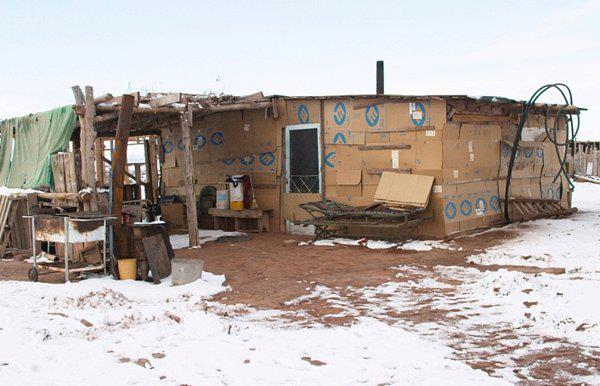
We headed town to Pine Ridge reservation through the Badlands. Pine Ridge is the most economically depressed county in the entire U.S. River and I passed through the tiny ghost town of Scenic, which is found at a corner of the Badlands just north of the reservation. Scenic is a classic western cowboy town: rolling tumbleweeds, abandoned trading post, an old frontier prison with a shackle chain still hanging from the ceiling, and only two businesses still open: a gas station and the Longhorn Saloon. The Longhorn is a tiny bar established in 1906, recognizable for its many steer skulls nailed across the top edge of the building. Reflecting  frontier racism, for decades the sign on front prominently warned "No Indians Allowed." The sign has been modified and currently reads, "Indians Allowed". Is that progress? (Keep in mind that the primary patronage of the saloon now is alcohol sales to people coming up from the reservation, which is dry)

Picture
Picture
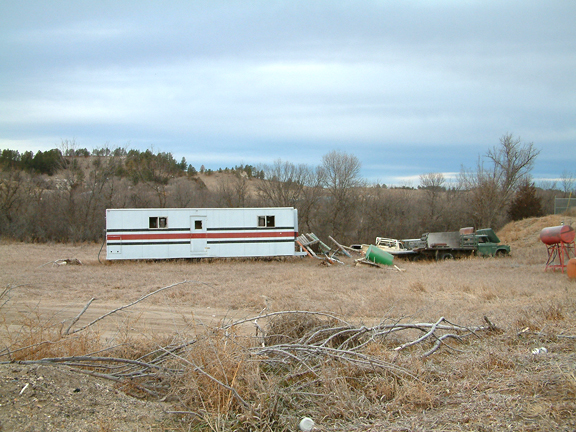
We continued south toward the site of Wounded Knee. River watched out the window as we passed clusters of tar-paper shacks and trailers, constituting a "town" on the rez...no stores, no gas stations. I talked with River about the history of the Ghost Dance and its role at Pine Ridge.
In the late 1880's, a Paiute man named Wovoka had a series of visions that started a new religion among the Plains Indians. Wovoka told the people that God had showed him that through hardship would come new life, and that if the people formed a circle--literally, but also symbolically as a community--and prayed together for peace, the turmoil of this world would burn away and the people would live. Wovoka warned them that this "burning away" would hurt very much, but it would establish a departure from our old mistakes to a new way of ministry and interconnection with life.

This new way of understanding became known as the Ghost Dance. The name comes from a misunderstanding by Whites on the frontier, who heard Wovoka talking about setting our old lives aside to die and then seeing new life being born within us. They lacked the understanding that he was talking about transformative struggle, and assumed he was urging some type of cult-like sorcery to whip up a warlike fervor.

Picture
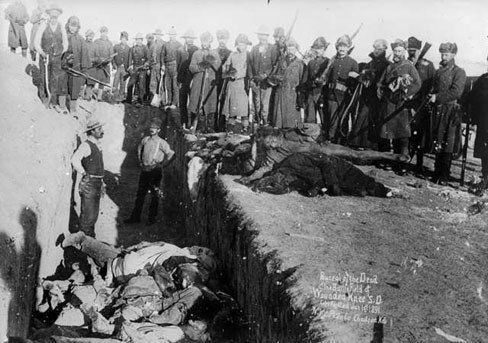
    Their peacefulness did not assuage their enemies, though, who saw it as a sign of weakness. This clash of ideas--renewal versus hostility--erupted on December 29, 1890 at Wounded Knee, South Dakota. There, about 300 Ghost Dancers were hewn down by machine gun fire and left for dead, the crosses and birds painted on their garments shining in the snow.

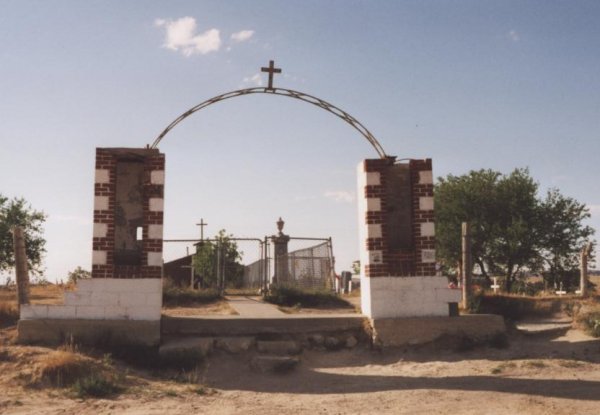
This was the final massacre of the so-called "Indian Wars." The site is now marked by a common trench grave and monument with names engraved on it. To Native people today of every tribe, the site is a shrine; it represents the difficult choice between fighting back and hating your adversaries, or becoming willing to suffer while praying and seeking peace with them, acknowledging them as our brothers and sisters whom we love despite adversity. And although that choice ended in tragedy in 1890, it has inspired thousands of people in the decades since then.

    It represents the truth that despite our human flaws, our adversaries, and the risks we take to love and care for others, there is still worth in continuing to mend wounds, seek good for those who do not seek good for us, and even keep loving...keep loving. The lesson of Wounded Knee is this: Even with the wounds brought upon you by those who condemn what you do, keep loving. Keep seeing them--even your adversaries--as holy people, children of our Creator, and continue the work of tending to the wounds of others even as others might add wounds to you.

This is a hard choice.

Picture
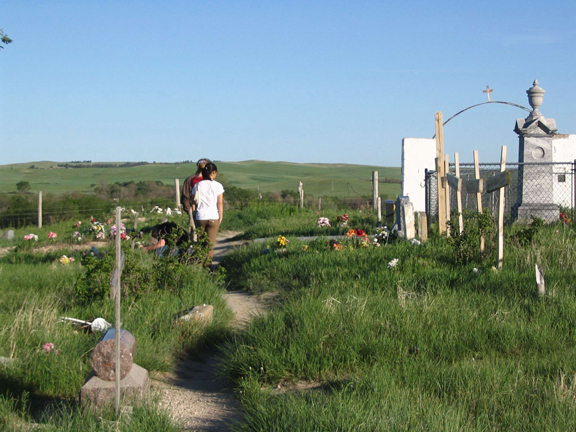
Today, Wounded Knee is a windswept field with a very simple monument marking the cemetery. There are no fancy tour buses, no restaurants, no shops, no neon signs--just a meager arch and a stone marker.
    Grasshoppers swarmed away from us as we strode toward the hilltop, and I showed River where the events happened: "That's the ridge where the soldiers were lined up. That's where chief Big Foot's tipi stood. That's where his body was found. Those distant ravines are where people hid. This is the long ditch dug as a mass grave by men paid $2 a body to clean up, days later. That's where the church once stood where the wounded were gathered to die of starvation (nobody nursed them, they just brought them in from the snow--still alive--to perish, while a banner wishing "Merry Christmas" still hung from the pulpit)."

    This was a more solemn time on our trip, obviously, and I hoped it would sink in somewhat to River. But I didn't want him to see it as a place where a brilliant dream had died, or where a prayer for peace failed. I wanted him to see it as a place where prayers for peace mean enough to be worth giving your life for--a place where the brilliance of a dream can succeed because people are ready to seek it to their last breath. It is a place that represents fidelity, perseverance, and courage, not a place of despair and loss.


Picture
1 Comment

Father-son road Trip pt.3 

12/14/2012

1 Comment

 
Picture
[Report of an essay written during summer]

I can say this about traveling with River: the Ritalin stays in within arm's reach of the steering wheel at all times.             Today we visited the sacred site of Pipestone, Minnesota. This is the one and only quarry on earth where the red stone used to carve ceremonial pipes can be gathered, and it has been used for about 4000 years. The site is known as a place of peace, and even enemy tribes gathered here to collect pipestone without any animosity. In older times, Indians would symbolically bury weapons beneath the trees to represent their covenant of peace (the Iroquois Confederacy is still represented by a great Tree of Peace, with weapons buried beneath it).

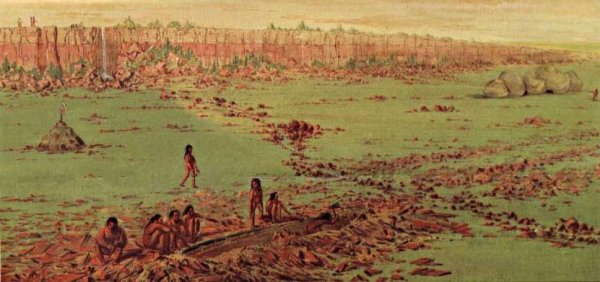
            Ceremonial pipes are misnamed "peace pipes" by Whites, but ought to be called "prayer pipes" instead. The red stone represents the collected blood of all wounded people, which the Creator gathered in his hands to mold into a pipe for demonstration to gathered Indians countless years ago. This is one of the few anthropomorphic depictions of God in any Indian legend, because God is not seen as a person but as a spirit in and through all things. God called the people to council and rebuked them for acts of violence and showed them how the blood we have shed has formed a vein of red stone at this sacred site. The teaching given to the people is that making a covenant to use the pipe as a ceremonial object requires a pledge of nonviolence and special care for wounded people; pipe keepers are known as helpers and healers. While warriors would also keep pipes as part of daily life, it was regarded as a tool only to be used between persons who pledged peace with on another. Once a pipe had been smoked with any other person, both people were entering into an oath to rebuke all animosity between them, past or future.
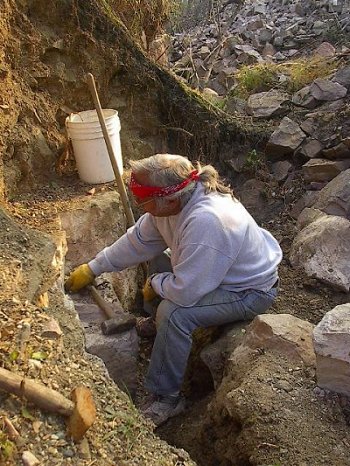
            River and I walked through the fields to the ancient quarry, a trench-like gash in the earth into which people still gather the stone in the old way: by chiseling it out through slow labor, with no mechanical tools. We left our prayer cloths in the cottonwood trees, took a small shard of the stone, and left.

Picture
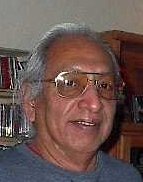
        I took River to meet Chuck Derby, a traditional full-blood elder who is widely regarded as "the guardian of the pipe." Chuck lives a simple life, but is widely respected as one of the most knowledgeable faithkeepers of sacred pipe lore and history. I presented chuck with a gift of traditional tobacco (called Kinnickinnick) and asked him if I could question him about a few things. He smiled and gestured me to sit down. I told him that River was nervous to meet him, and hoped Chuck would be "a funny man," which made Church and his wife both laugh.
            During our conversation, Chuck taught me the answers to many of my questions. He clarified, for example, that most families will keep two pipes, not just one; one pipe is used for social smoking, and another for ceremonies. The red pipestone can be used for either purpose, and it is not sacrilegious to use a pipestone pipe in casual settings with friends. Furthermore, there is no formal exalted position of "pipe keeper," which is a modern invention to grant sanctified status to persons promoted as spiritual leaders. Any person who has been taught the teachings of the sacred pipe can choose to incorporate that into their spiritual life. A "pipe keeper", then is not meant to designate someone as a spiritual leader, and any ordinary person can choose to be a pipe keeper. A spiritual leader, by contrast, is someone who has learned all the songs, ceremonies, and customs of their people and is recognized as a helper or healer for their people.

            Chuck said that the Ojibway had originally used pipes made of black and white stone, but adopted the red stone from the Sioux and now regard the red pipestone as the more sacred. But the Ojibway did not adopt the Sioux legends about the pipe's origins, and Chuck is unaware of a particular pipe origin story among the Ojibway.

            I asked whether a pipe's consecration (blessing) is bestowed upon the pipe itself, or upon the person who keeps it, and Chuck said "both." I explained that I had come into possession of a very old Ojibway ceremonial pipe, and wanted to care-take it appropriately, and was confused whether the pipe carries its original blessing or whether it should be re-blessed as it comes to me. Chuck suggested that the pipe should be re-blessed, and was pleased to hear that I had chosen to do that, bringing the pipe into the sweat lodge and kept on the west side while the ceremony leader gave a blessing. Chuck said this was sufficient, and was happy to know it had been cleansed. I offered to show him this pipe, and he said "I would be honored!"

            I brought in the cedar case, and Chuck rubbed his hands with cedar to cleanse himself. I opened the case, and Chuck's eyes dazzled! He lifted the heavy black bowl, inlaid with lead designs, and marveled. He told me that the lead inlay was made from molten bullets, and indicated the age of the pipe as mid-1800s. He was thrilled with the coiled sumac wood stem, which still bears traces of ocher paint and brass tacks, and said that the design showed that this was not a cheap commercial pipe or souvenir, but something that bore great power and had been skillfully made by someone with immaculate traditional knowledge. He noticed the carved birds head and nearly jumped back with astonishment: "This is a Midewiwin pipe!"

            The Midewiwin is the ancient community of Ojibway men and women who practice the traditional ceremonies.The Midewiwin lodge so private that their ceremonies are never observed by outsiders. Chuck said that this pipe had been used in very old and very powerful ceremonies, and was nothing like the typical "peace pipes" that most people see; this pipe was of a rare type that Chuck himself has hardly ever seen. He said it was an honor to even touch it!

            He advised me to pack the pipe with sage and to seek a Midewiwin man's help for guidance. I said that I wanted to be very appropriate and not blasphemous with this sacred object, and Chuck said "You are doing everything right. You gave me a gift, you asked me for help, and you are taking good care of this. Make sure it is never put on display, and never sold." I asked Chuck whether Midewiwin people would be upset with my having this pipe, and he said "no, because you are being respectful toward it. They would be upset if this object was being treated carelessly, but they will be pleased to know that something this strong has been cared for and that you want to learn its proper use." I told him that I wanted to be very respectful toward it, and that I was aware that my knowledge was not complete because I am not a Midewiwin man. Chuck said that it was not necessary for me to do so, but that I should at least keep his in my family and pass it down someday.

    To Chuck, pipes are living things. They die in captivity. But they thrive and throb with power in their "natural habitat", which is in a family where it will be used, kept clean, and passed down to future generations. A pipe with a family future is a living pipe. By "kept clean", Chuck did not mean polished and washed, but kept in a traditional manner: packed with sage and cedar, cleansed in a sweat lodge, plugged with medicine, and joined only when used for ceremonies by a proper, trained custodian. Chuck assured me that the pipe had "come home", and that the pipe was meant to continue its lineage with me and my descendents.

    He also took an interest in River, calling him aside and stooping to say to him that River needed to begin to prepare to learn these things too, and should start creating a medicine pipe of his own. Chuck took down a small L-shaped piece of raw pipestone and handed it to River and advised him to begin practicing carving a pipe. This was a stone that Chuck had personally cut from his family quarry.  By comparison, I was 20 when I began learning these things! River told me that he would keep the stone uncut until he had found a pipe-making elder who could teach him how to carve it properly, which was a good thing for him to say.

    This has not kept River from using all of this as an angle for his advantage. At dinner he pleaded, "Today I impressed an elder enough that he gave me a piece of pipestone. Surely that means I deserve a piece of pie for dessert right?"

Nope, not even close. But nice try.

Picture
Chuck Derby working in his family's ancestral pipestone quarry
1 Comment

Road Trip, Pt. 2

12/13/2012

0 Comments

 
Picture
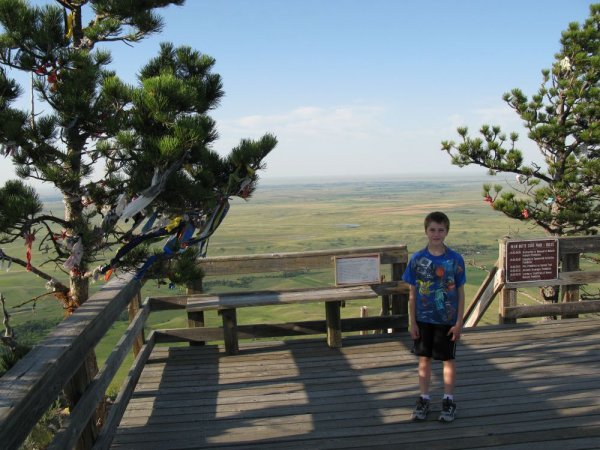
River and I are in a motel on the Cheyenne River Indian reservation, and this is like nothing you've ever seen. The motel almost looks abandoned for one thing, and the rooms are Spartan. Not even a phone. A Folger's can collecting water dripping from the toilet tank. No channels on the TV. A few other details I won't get into.             This has been a full day. We traveled to Bear Butte, the holiest of all sites to the Plains Indians. On the north face of the hill, the northern Cheyenne maintain a permanent encampment of sweat lodges to purify within before ascending the hill for four days of solitary fasting and prayer. Of course, this must be done without any intrusion from hiking tourists, so the tribe has a standing guard of Dog Soldiers, the renowned band of warriors who keep watch over the sacred sites and block entry by outsiders. No outsiders--not even Indians from non-Cheyenne tribes--are allowed. This is a state park, but its primary significance is as a holy site to over 60 tribes, so there is extraordinary accommodation for the tribes' use of the site for ceremonies. This site is far to the west of the Ojibways, but there is even evidence of Ojibway observance of ceremonies at Bear Butte.

Picture
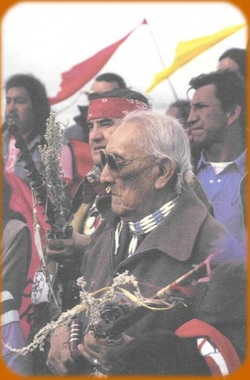
    River and I were privileged to view the sun dance ceremonial items and eagle feathers which had belonged to Frank Fools Crow, the premier holy man/healer of the Lakota who is regarded as "the Indian pope." Fools Crow passed on in 1989 at the age of 99. Fools Crow taught the people to be open-hearted to all races and to share with one another, yet he was also outspoken about the misuse of Indian spirituality by outsiders (inauthentic new-agers and "shaman-for-hire" types), and once said that "those who talk the most about Indian religions know the least about our healing secrets." Fools Crow, who had but a third-grade education, delivered a prayer before the United Nations and became known as a primary representative for Native peoples' sovereignty issues in politics, advocating for the return of the Black Hills to the Lakota according to the terms of the Fort Laramie Treaty of 1868. It was he who uttered the now-famous slogan, "The Black Hills are not for sale!"

Picture
Fools Crow refused to accept credit for his powerful healing abilities. This man was gifted with miraculous powers, and one of my close friends witnessed Fools crow perform miracles (described in the non-fiction book, "Greengrass Pipe Dancers," which I illustrated for the publisher). But Fools Crow admonished those who gave him gratitude, advising them not to bestow glory upon him for his life's work: "I am but a vessel for the Creator to work, and so are you", he said. "I am like a hollow bone tube through which the Creator's mercy and love can flow into others. I am not the thing that flows through the tube, I am but the tube. Praise the thing which flows through, for it is God. I am a hollow bone tube, and so are you, and so is every two-legged on this mother earth."

Picture
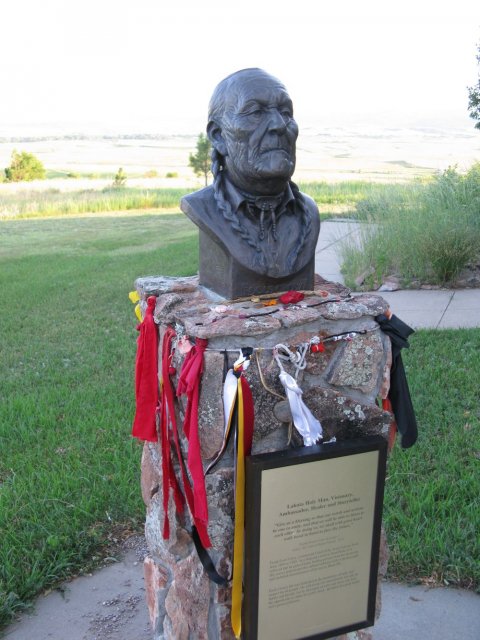
In this, he taught us to respect the gift of healing by praising God, and not to see ourselves as the source of these miracles. We are called to be merciful and loving to all others, but we must remember that healing comes from God, not ourselves. Nobody becomes a healer because they crave glory or esteem. Fools Crow lived in a tiny shack with no running water, and chopped his own wood until he was too crippled. He had no wealth, just horses, jeans, cowboy boots, and flannel shirts. But when he died, people came from around the world to commemorate him and the line of cars was over one mile. Fools Crow's sculpted bust is mounted at the visitor's center of Bear Butte. I am humbled by his example, which has reminded me that although I have scarce income, I am a very rich man in the truest ways.

Picture
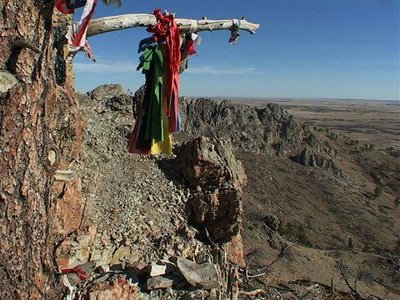
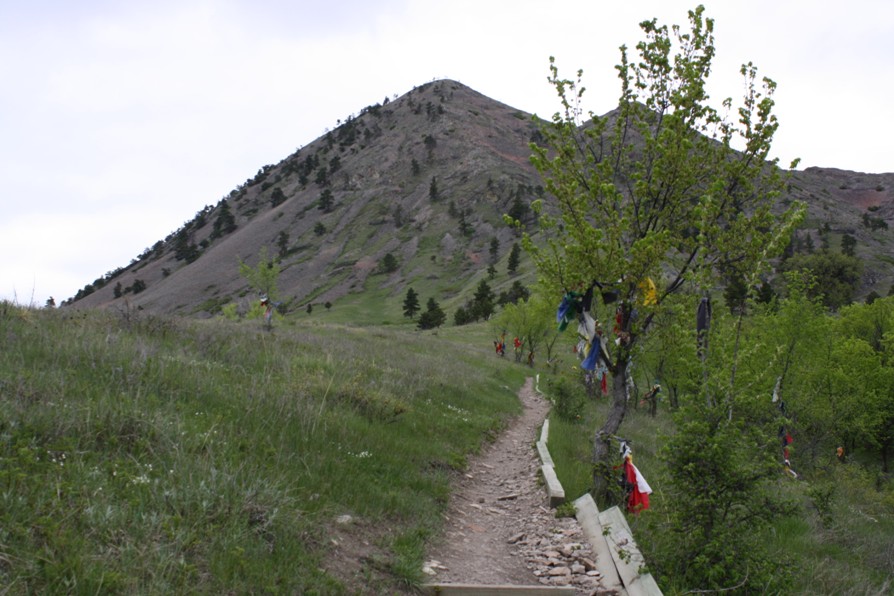
   The path up Bear Butte is two miles long, very steep, and not designed for tourism hiking. It is a thin ledge of rock shards creeping along steep drops and winding up the butte in switchbacks through the thinning air. Every single tree is adorned with prayer flags of colored cloth and offerings of sacred tobacco wrapped in cloth and tied into branches. There is a standing request that visitors not disturb or desecrate these things.

Picture
  As we trekked upward I became very afraid for River. He is not well coordinated, and his awkward movements often result in clumsy slips and falls. To see him scrambling along edges walking over thousands of loose shards was breathtaking because the hill's sides slope down steeply with no lining rails.

Picture
As we descended the hill, I saw a golden eagle begin to whirl around the peak and corkscrew higher through the rushing winds. It did the most astonishing thing: it opened its wings and, without moving, let the current lift it straight up over the hilltop where it froze in place, stationary in the wind like a kite. The wind rushed and screamed down the hillside like a gathering storm, yet the eagle remained perfectly still in the sky, not circling or drifting. I remembered Bill Miller's teaching that the eagle faces storms by opening and locking its wings, rising above, rather than cowering. For an hour River and I watched the eagle, which was almost eerie in its statue-like levitation as if it were a sticker placed on a television screen which does not move while the scene beneath it busies.
            River was really affected by Bear Butte, and asked questions like "How old do I have to be to go on a vision quest?"
        River has been a lot of fun on this trip so far. It's hard at times to appear constantly fascinated by his chatter, but we're getting along very well. He loves the Black Hills and hopes we'll move there. When he enters a souvenir rock, gem, mineral, and fossil store, his whole body reacts with a sudden spasm of overwhelm: his limbs twitch and he shudders like someone walking into a force field wall as the deepest loves of his soul bubble up all at once: shiny treasures!
 
           Just moments ago River bounced on the bed behind me and said, "You know, this motel is better than I first realized. I didn't expect them to have a TV, even if it has no channels. I didn't expect it to have a lamp like that one. I didn't expect it to make me feel comfortable. It's better than I first thought."


0 Comments

Father-Son Road Trip Pt. 1

12/11/2012

3 Comments

 
Picture
[This is a repost of a previous essay, written during summer]

River and I are taking time to venture on a road trip together, just the two of us, for thousands of miles. I felt it was important for him to see where we came from, to travel up to the Great Lakes area and see Ojibway homelands and people, as well as to have a memorable chance to bond with me, as all fathers and children should (I believe that a father who hasn't taken his child--son or daughter--on a personal adventure has been remiss). We are curently in South Dakota, in Lakota Indian territory. The Lakotas had been foes of the Ojibway in the 1700s, but since then have been amicable, although never allies in a warfare sense (Lakotas are a plains people, and Ojibways are an Algonquin woodlands people. The Lakotas *were* woodlands people, until Ojibways drove them out to the plains in the early 1800s).

As we've driven, River has kept track of the wildlife we see: porcupines, pronghorns, deer, buffalo, hawks, chipmunks (which River is able to coax to climb into his hand to eat), and raccoons. We've been in the Black Hills for two days. In the daytime we drive, hike, fish, and climb, and at night we've found forgotten backroads to sneak into and sleep. We cook over a propane cooking stove, which River thinks is just the coolest thing we've ever done. 

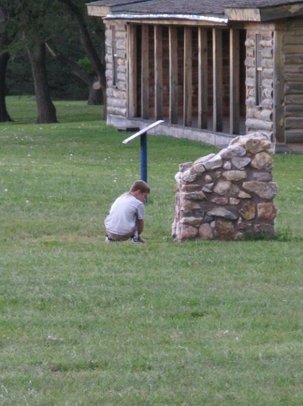
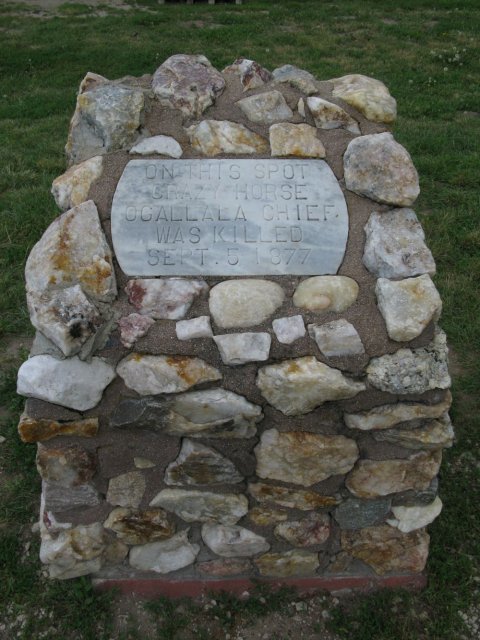
I've emphasized sites with cultural significance rather than tourist appeal. For example, I took River to Fort Robinson in Northwest Nebraska, and we stood on the very site where Oglala chief Crazy Horse was bayonetted to death, and then we walked to the prison house where 150 Cheyennes from Dull Knife's band were imprisoned when they tried to sneak back from Oklahoma to their original homeland. When the band revolted in prison, they were massacred on the spot. River and I sweat with Cheyennes, so he knows men who are descendents of these people, and was able to stand on the ground of their stories.

I also took him to Sylvan Lake in the Black Hills, which is now a popular tourist destination. But I took him on a hike all the way around the lake to the back Northeast side and we climbed a rocky embankment up a mountain to the site where Crazy Horse went on his first vision quest. The site is not marked or identified in any tourist publications, and there is no identification of it as a cultural site; if you don't know what it is, you'd never know it was important. Crazy Horse was taken there by his father, led by a red-tailed hawk, to fast and pray for four days, and there he had his vision that gave him his face paint design and prophecy about his life's work. We took a few stones from the site to keep and give away to tribal elders back home.

The sky turned dark and began to thunder ad rain as we drove through the back roads of the Hills, avoiding the main routes. We stopped to walk and explore in the cold rain. River does enjoy the tourist stops, of course, and thinks the Black Hills have the coolest stores he's ever been to: gem and mineral specialty shops! He gazes at the shelves filled with treasure: fossils, petrified wood, crystals, and tumbled gems. He tries to wrangle the salespersons down to his budget: "I have two dollars and fifty-two cents. What can I get for it?" That's the "River method" of shopping.

He also embarked on a personal quest to find the cheapest vial of Black Hills gold flakes suspended in water that he could. This is a common souvenir trinket, and any bottle of shiny gold flakes is like a drug to River! Yesterday he told me he thought his name should be "River Shiny Raccoon," and I like it.

I also gave River a hawk feather with a beaded stem to wear in his hair, and he couldn't be prouder! He wore that thing everywhere--even Dairy Queen. The stem was beaded by Billy, the Cheyenne man who "works the rocks" for our sweatlodge.

We've explored a few ghost towns, too, and found one with a water pump that still worked (!), so we cooked our dinner at the site of the old jail and ate in the sunshine and breezes. River thinks a can of Chef Boy-Ar-Dee cooked over a fire is real old-style frontier living. 

At this moment I'm in a small cabin that has an ancient electrical outlet, so this is the first electricity I've had for four days. We seldom even have a cell phone signal.

We're going to leave camp and go to Pine Ridge Indian Reservation in Shannon County, South Dakota (which is the poorest county in America). I'm going to take him to the site of Wounded Knee, where 300 Lakota men, women and children led by Chief Big Foot were massacred on December 29, 1890. The army had surrounded them because they were afraid of the Ghost Dance, an apocalyptic/ millennial prayer dance, and the massacre was the last major atrocity of the Indian Wars (but not the final incident; military massacres of Indians continued until 1918). The bodies are in a mass grave marked only with a marble tower and fence strewn with countless prayer flags and tobacco ties.

Wounded Knee is a reminder that we must be willing to love without fear of consequence, to pray for our adversaries, and to be willing to make any sacrifice to support renewal of life for all harmed and suffering people
Picture
3 Comments

"A Better Taboret" - customer review

11/16/2012

7 Comments

 
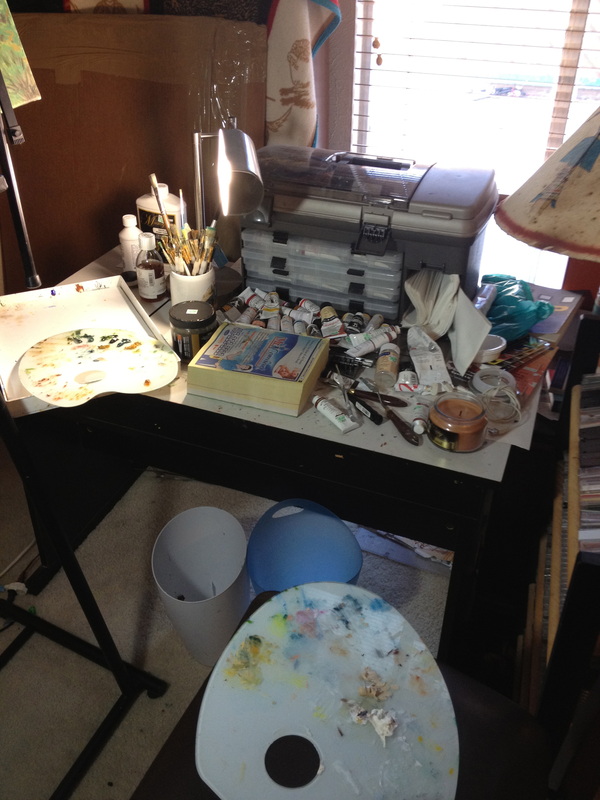
Until today, my "art station" has been the weak, cheap drawing table I had in college--a particleboard catastrophe stacked with paint tubes, bottles, boxes, and trash. Palettes had to rest anywhere they could (such as on family room chairs!). Before:
Picture
I decided to invest money in my own career equipment, and very nearly chose the Best Shawn's Painting Station--a massive $3500 taboret with integrated easel, cabinets, and drawers. It's nice, but not quite what I wanted. For one thing, the integrated easel meant I'd have to face into the window sunlight for this to fit into my painting area. And it's LONG, and I don't have that much space. I'd rather have a taboret set to my right while I paint at a separate upright easel. While Googling "Taboret with paint storage," the very first result was a bullseye. A Better Taboret - Deluxe Studio Edition.

But the price! It's costly. For that investment, it had better be worth it.

I wrote to the inventor, Casey Childs, who is also a skilled oil painter. After spending weeks contemplating, I realized that A Better Taboret seemed to have every feature I've wanted. It's the one piece of studio furniture I'd forever regret passing up. So I placed my order, which arrived today (they're custom-made, so turnaround is about a month).

First, a note on delivery. It arrived in absolutely perfect condition on a wood palette, surrounded by bubble wrap, a layer of heavy cardboard, another layer of foam padding, and then wrapped in plastic secured with three heavy straps. Wheels are not attached at arrival, so it takes muscle to tip the taboret on its side to attach them. The wheels are VERY heavy-duty, and will last. Two have locking mechanisms to stabilize the taboret.

For the most part, no assembly is required. You can customize details such as the size and positions of paint tube slots in three drawers, but you don't have to fool with any hinges or joints--it arrives pretty much ready to use.

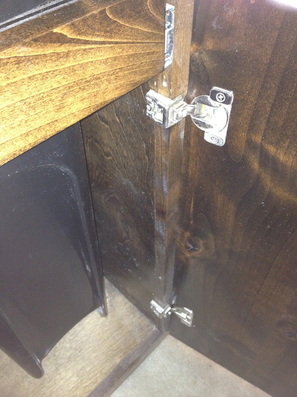
That's when you start to notice the details. I haven't found a single flaw in the whole thing. Every possible detail has been considered, and the taboret is made with precision--nothing seems rushed or corner-cut. The door hinges are top-quality, drawers have a sturdy gliding track, the wood is premium quality, and even the tabletop glass palette is grey-backed--a small touch that only a painter would have remembered (oil painters know that a neutral grey surface helps mix more accurate colors).
Picture
Top-quality hinges
Picture
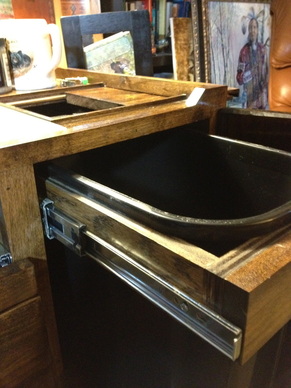
A rolling panel conceals an interior trash can, which also has a sliding top hatch. This is genius!
Picture
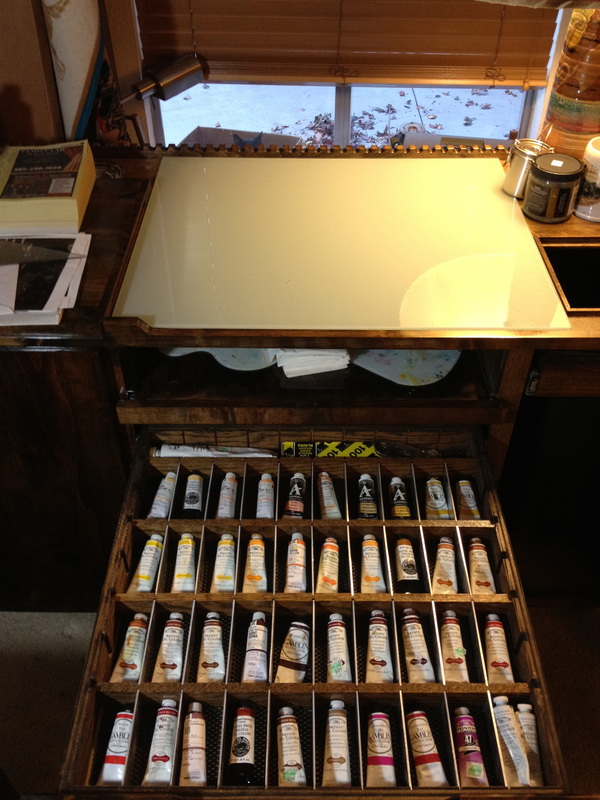
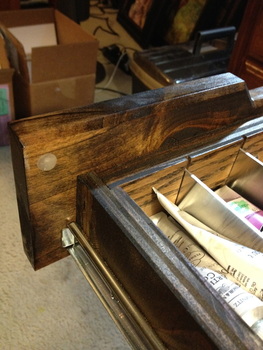
You get three paint tube storage drawers, divided into sections like a printer's drawer. The wood rows and metal columns are adjustable, and are made with perfect precision--not the slightest bit of loose or offset imperfection.
Picture
An example of small details considered: pads inside drawers protect the wood. Small things like this could have been skipped and who'd notice? But NOTHING is left out.
Picture
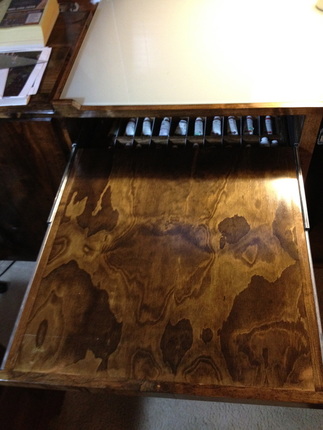
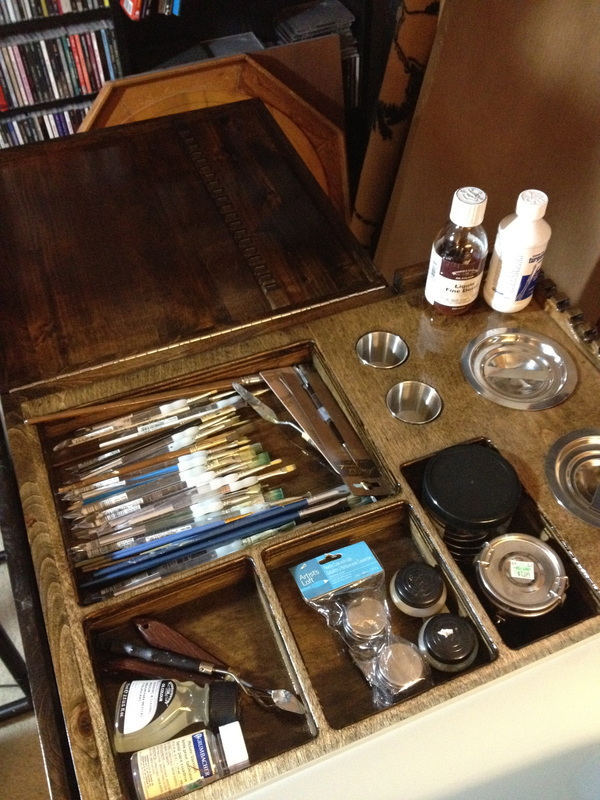
In addition to a glass tabletop palette, you also get a HUGE slide-out tray for other palettes, reference images, computer, whatever. And look at that gorgeous spalted wood! The shelf gliders are strong and have an automatic "stop" so nothing will fall out or tip over.
Picture
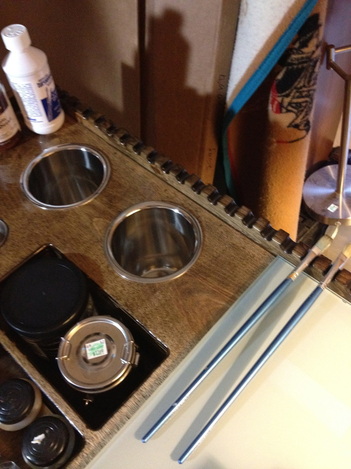
This is awesome. There's a top panel that opens out to give you additional tabletop space, and beneath it are all sorts of compartments for brushes, bottles, etc. The taboret also includes two large fluid jars that fit flush into the top, and two small cups for liquin or glaze or whatever. When you're not painting, just fold the panel back over to protect your materials (and look clean). The open panel has a notched brush holder so that wet brushes can be organized. And note that the hinge is full-length, not a couple of small hinges. This is strong. You can set a laptop on it if you want, and it won't cause damage.
Picture
This notched edge runs the entire back length of the taboret, so there's no shortage of places to rest brushes during use. One more detail that a cheaper manufacturer could have skipped, but it just enhances the whole thing.
Picture
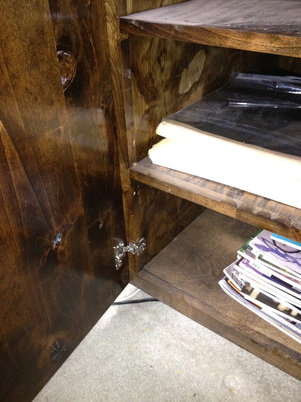
Three spacious shelves inside a cabinet for art books and supplies. Note the heavyweight hinge, not a "budget" hinge with a couple of cheap screws. I need to dust, sorry.
Picture
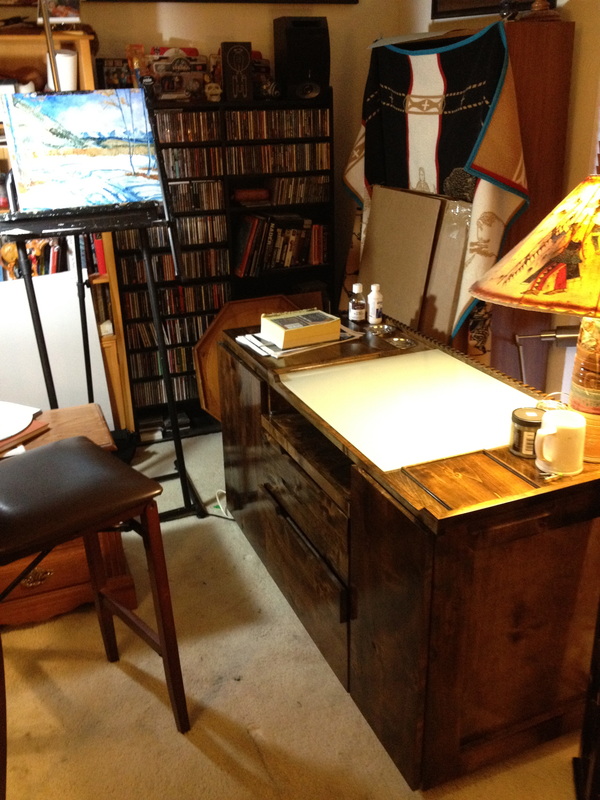
This is my art station now! Compare it to that first photo--what a difference!
Summary: this taboret is worth every penny. It's sturdy, made with expertise, beautiful, made in America, and designed by an artist to meet every conceivable need, and built by a skilled carpenter. You wont find anything comparable in any imported painting station.
Remember, equipment purchases for professional artists can be deducted as business expenses--so if you can budget for one, then don't hesitate. It will be impossible to find any disappointing attribute to this taboret.
7 Comments

October 28th, 2012

10/28/2012

1 Comment

 
1 Comment

Monster Trucks and Father of the Year

7/30/2012

1 Comment

 
Jeez, the things I do to try to be a good daddy. The ways I risk my life and sanity, the things I never thought I would find myself doing…

I found myself at a Monster Truck Jam. Yes, I bought tickets and everything.

I’ll consider myself a cultural anthropologist for a minute, and report just what I experienced. My sons both like spending Saturdays with me, and in Oklahoma City that means a short list of attractions. Cedar, my youngest one, is an enthusiast for all things mechanical: trains, cars, trucks. So I gritted my teeth, held my nose, and logged on to Ticketmaster.

Let me tell you, a monster truck jam is EXACTLY like you would think. It’s not even something you can parody, because it’s exactly like a parody of a Monster Truck Jam! We made our way to our seats just as the show started, with “Let’s Get It Started!” playing on the loudpseakers. Our seats were in Section 221, Row H...You know, right behind the cowboy hats. And right in front of the cowboy hats. Our seats were in-between the, um...well, you know. The cowboy hats.

So they play all this metal music at super-loud volume, with graphics of waving American flags all over the wall screens, and they introduce the trucks, which emerge onto the dirt floor with the kind of roar that would shock a rocket engine technician. Cedar fastened his hands over his ears and never removed them again. It’s what Chuck Yeager would drive, if he wanted a truck shaped like a Teenage Mutant Ninja Turtle and needed to compensate for a small penis.

One by one, the trucks come out and rev their engines. They race toward a row of pre-smashed cars (gyp!), then suddenly brake, then slowly bump up over them and gas the engine to reel skyward and land with a dusty “thud!” The weird thing is that each truck is supposed to be a “character” in the four-truck ensemble, and somehow we’re supposed to know, care about, and become loyal to the truck of our choice. Apparently everyone else knows this, because they all have the same hand signals to cheer on, say, “Blue Thunder” or “Bad Habit” or “The GraveDigger.” They all seemed identical to me.

So the trucks do a demonstration lap around the arena, bumping and trampling over cars at the edges of ramps, and making noise. Then they all stop in formation and the rock music stops.
Queue the soft, sentimental country music. Now the announcer walks out in a lone spotlight and tells us it’s time to honor our special guests. Would the police in the audience please stand? Then the fireman? Then the EMTs? And finally, the most important people in the world, our military...would y’all stand up? (paste in the requisite hyper-patriotism speech here, during which I learned that us Oklahoma-types are the “real Americans of this country” So shut it, all you unpatriotic people who don’t live in the Midwest!). Now we march in the flag (extra credit if you can get which country music song plays here), and I suddenly realize that I’m probably the only one in the whole arena who isn’t a Rush Limbaugh Republican. This is the kind of place where Sarah Palin is a goddess. This is the place that launched a dozen episodes of “Squidbillies” (Google it if you don’t know).

Now, see, this is how clueless I am about monster jams. I thought the first couple of “demo laps” around the arena were just mild exhibitions, and that once the event starts all sorts of wild, different new stuff would be happening-- Silly me! As it turns out, we could have left after the first two “demo laps” and still seen everything, because here’s what happens for the next...two...hours:

They have a “Qualifying round”. All four trucks are timed driving laps around the arena, bumping jumps over the same ramps and pre-smashed cars, while the event organizers burn through enough royalty fees for Metallica, AC/DC, various “Nu-rock” bands, “Bad to the Bone”, and more Metallica, to finance their own national stimulus package.

Adhering to the charade that this is somehow a competition, the exact same four trucks—having ALL “qualified” (whoa!)—now enter the contest. And you know what the contest is? Well by golly, it’s DRIVING AROUND THE SAME @#$%^ING ARENA, DOING THE SAME !@#ING THINGS AGAIN!

We’re watching all of this in-between various cowboys and cowgirls coming and going across our row to the bar and snack vendors, returning with plenty of Budweiser and what seems to be nacho chips drenched in what can only be molten earwax. And this brings up a technical question: why is it that a subculture that adores its gigantic belts still hasn’t conquered the feat of keeping pants above butt-crack level, let alone wearing underpants? (this goes for the women, too!).

Two moments of excitement did occur: a plain-clothes cop busted the entire two rows in front of us for buying beers for the teen-age girls (in the denim miniskirts and cowboy boots), resulting in $750 tickets each (how much more hillbilly can you get than “I got busted buying my 14-year old daughter beer at the Monster Truck Jam!“?). And the stunt riding by motocross bikes was amazing—even if there were only three riders and it lasted 5 minutes. Now, back to the same four trucks doing the same things for another hour.

Apparently, the organizers think we have the short-term memory of goldfish, because their idea of “mixing it up” is to have the trucks - (hang on to your cowboy hats) - turn around and GO THE OTHER DIRECTION around the arena! Shazam! The crowd goes NUTS for this!

Through all of it, the masquerade that this is a tournament is never abandoned (see Engels, Freidrich; “False Consciousness“). The incessant strolling vendors hawking “Grave Digger” shirts and “Grave Digger” flying discs and “Grave Digger” cotton candy was in NO WAY a hint that that the winner would be (gasp!) Grave Digger. Autograph session for kids after the show.

Cedar loved the motorcycles, and bounced in his seat and made the “Rock on!” devil’s horn sign with his hands. River sat there as if the whole two hours was as scintillating as a math lecture. His only glimmer of excitement consisted of,

“Ooh, cotton candy!”
“No!”

Excitement squashed.

Oh, and they sell a 2-DVD set! Too bad this was all happening AFTER Valentine’s Day. I never know what to get Tonya.

1 Comment

Sun Dance Season

7/8/2012

0 Comments

 
[This is a repost of a previous blog]
I just returned from the Cheyenne-Arapaho Sundance with my son River. This is the celebration of a new year, according to the Indian ceremonial calendar, and is the most significant rite of the tribe. It was River's first time to attend, but for the record he spend all of his time with other kids hunting grasshoppers in the prairie grass.
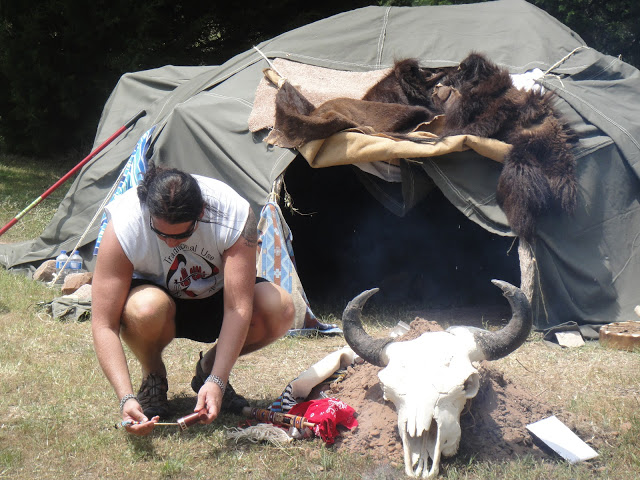
The last time I was on this ground, it was for a cleansing ceremony at a time when the buffalo surrounded us. Tonight, we rumbled up the dirt road to a clearing where hundreds of people were gathered in encampments made of willow-limb arbors and tipis. Among the dozens of tipis in the prairie wafted the smoke of cooking meat over campfires as elders sat and whittled and children ran through the grass. In the center of the clearing is the Sundance arbor and a huge tipi in which the pledged dancers were preparing for their four days of ceremony.

In the Sundance, dancers pledge to spend their time without rest dancing around a center tree inside an arbor, baking in the sun and weary with exhaustion, but in total devotion to renewing life for all creation. The Sundance is a ceremony that teaches us to willingly expend ourselves for the sake of all life, to suffer on behalf of the suffering. Western cultural values tend to eschew and pathologize those beliefs, but in tribal cultures it is considered obligatory to work, perhaps even too hard, for the sake of others who suffer.

One family called us into their encampment to feed us. They had no idea who we were. But this is precisely the ethic I am describing: "What can I do for you? Would you please take what you need from me?" We shook hands and filled our bowls with hominy stew (a traditional Plains Indian dish) and a cold can of Sunkist pop (another cultural tradition of the Plains Indians). They couldn't remember my name so they just called me "Hey, Anishinaabe!"

We watched as the women lined up in the field to give their blessings to the ceremony in the form of tying a prayer cloth into the boughs of the center pole (since this ceremony  represents renewal of creation, women are central to it and have the role of initiating the ceremony in this way). Then the encampment watched reverently as the center pole was lofted into place by the men and planted into the ground. Elders knelt as this happened, like a congregation before a sacrament. 

Oh, and I also met an elder named Eugene Blackbear, who is very revered in the Cheyenne Tribe, and he ordered me to help him build his tipi.  Notice that I didn't say "he asked me"; he pointed at a lodge pole and said, "You! Lift this and put it on the east side!" Then he directed me to fastening the seam pegs down the front of the tipi (since I am tall). Mr. Blackbear is a descendent of survivors of the Sand Creek massacre, and also appeared in the film "Last of the Dogmen".

So at the moment I smell like campfire smoke.

Tomorrow, River and I are leaving to head northward to the lands of the Ojibway, so he can see and meet more of the people. I'll also take him to the Black Hills and the site of the Wounded Knee massacre. 

0 Comments
<<Previous
Forward>>

    Culture and Traditionalism

    Photos and information about traditional culture and art
    Categories

    All
    American Plains Artists
    Argus Dowdy
    Art Of The West
    Black Elk
    Blackfeet Indians
    Bruce Greene
    Earth Pigments
    Healing
    In Beauty It Is Finished
    Landscape
    Martin Grelle
    Modern Art
    Mother
    Natural Paints
    Oil Painters Of America
    Pipestone
    Saddlemaker
    Sioux
    Susie Yazzie
    Sweatlodge
    Tipi
    Tom Tierney
    Ute
    Violin Maker
    Vision
    Work In Progress
    RSS Feed

    Archives

    September 2019
    November 2018
    September 2018
    May 2018
    April 2018
    July 2016
    August 2015
    May 2015
    August 2014
    July 2014
    February 2014
    December 2013
    August 2013
    May 2013
    April 2013
    February 2013
    January 2013
    December 2012
    November 2012
    October 2012
    July 2012
    October 2011
    August 2011
    July 2011
    September 2010
    April 2010
    October 2009
    July 2009

Powered by Create your own unique website with customizable templates.